

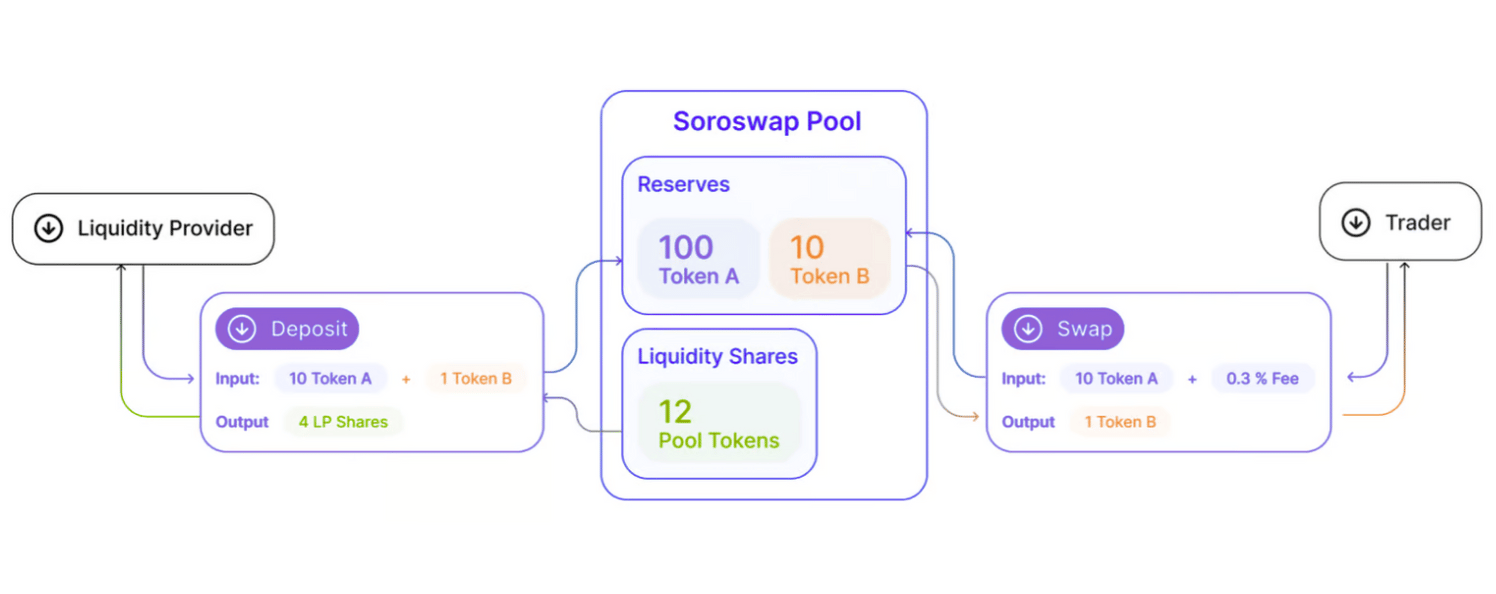
Introduction
In Soroswap Finance, each liquidity pool acts as a trading venue for a pair of assets. When a pool is initially created, it starts with zero balance for each asset, requiring an initial deposit to facilitate trades. The first liquidity provider sets the initial price by depositing equal values of both assets, aligning with the current market rate. This prevents immediate arbitrage opportunities, which occur if the assets are deposited at a ratio different from the prevailing market price. Subsequent liquidity providers must deposit assets proportional to the current pool price to prevent their contributions from being arbitraged. If they believe the current price is inaccurate, they can engage in arbitrage to adjust the price to their desired level before adding liquidity, ensuring their assets are valued correctly in the pool.Pool tokens
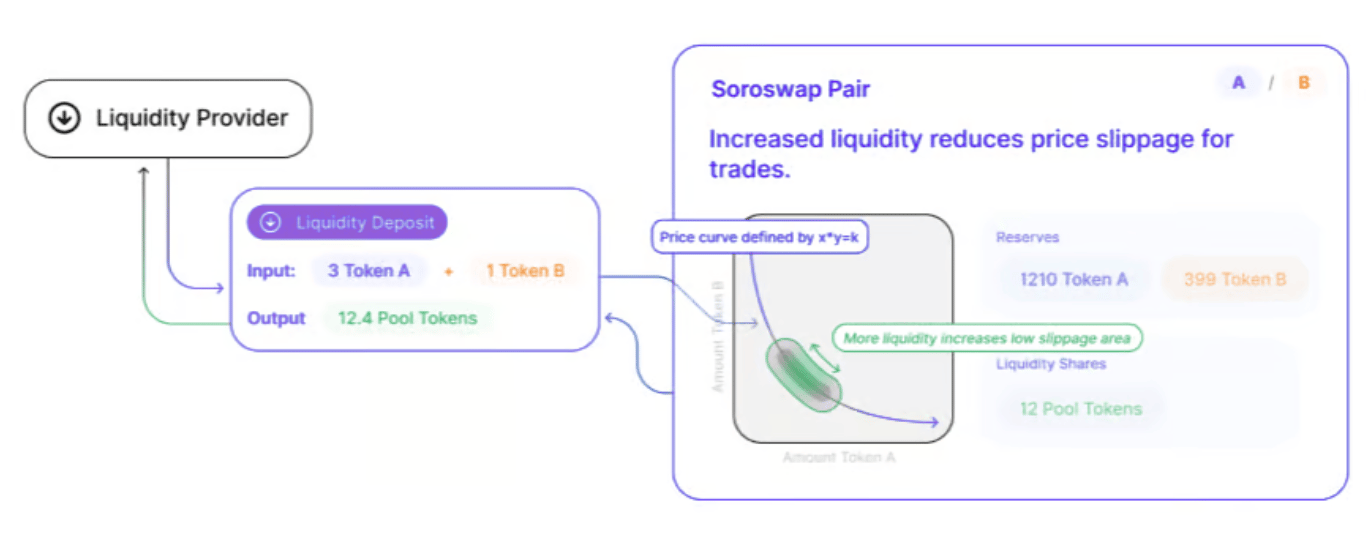
Learn more with advanced topics:
Why pools?
Soroswap Finance uses liquidity pools instead of traditional order books to enable decentralized token swaps. Liquidity pools consist of user-provided assets locked in smart contracts, allowing seamless, automated trades without relying on a centralized intermediary. This structure addresses key limitations of order books, such as the need for intermediaries, active management by market makers, and high infrastructure requirements. Pools in Soroswap operate autonomously, leveraging smart contracts to continuously provide liquidity and execute trades. This design is more suited for decentralized ecosystems where tokens may have low liquidity and anyone can create or trade assets without permission. It simplifies the process, ensures more consistent liquidity, and opens up participation to a wider audience, including those without sophisticated trading tools. By embracing a pool-based system, Soroswap benefits from the open, trustless, and permissionless nature of blockchain technology, allowing decentralized finance (DeFi) to thrive with minimal friction.Developer resources
- To see how to pool tokens in a smart contract read Providing Liquidity.